Showing posts with label Lists. Show all posts

Monday, 19 June 2017

Ten LGBT films that I like

June is LGBT Pride Month; to mark the occasion, here is a selection of LGBT films that I like. 

Strangers on a Train (1951)


This one doesn't feature any overt homosexuality, though there are certainly some pretty strong undertones. Here, the latent eroticism that bubbles between the main characters plays, more than anything, as an interesting manifestation of Hitchcock's tendency to pick at uncomfortable topics as a means of creating tension. This is perhaps seen most clearly in the first meeting between Farley Granger and Robert Walker
a scene that bristles with flirtatious energy, where the famous premise is established. Beyond this, Strangers on a Train is full of classic Hitchcock stuff: virtuosic set pieces (the merry-go-round); subversive, macabre subtext; and of course masterfully crafted suspense.


Persona (1966)


This, what many would describe as Bergman's masterpiece, is also all about the latent eroticism, once again dealing with sexual ambiguity between the two central characters. As the film progresses, we observe an increasingly strange, intimate relationship develop between a nurse and the actress she is looking after, that peaks with a confessional description of a sexual encounter on a beach, one of the most remarkably carnal scenes I have ever seen. 
With an avant-garde opening sequence that leaves you reeling, typically striking, austere camerawork, and two exceptional performances from Bibi Andersson and Liv Ullmann, Persona is a film of intriguing potency. 


The Bitter Tears of Petra Von Kant (1972)


Rainer Werner Fassbinder's heady, somewhat autobiographical, melodrama The Bitter Tears of Petra Von Kant is a frenzied chamber piece of destructive power games. All of the theatre plays out in one flat which is captured masterfully by cinematographer Michael Ballhaus. Moving loosely about the oppressive space, we saunter from one carefully composed shot to another, astutely detailing the dynamics between the collection of typically tortured characters. 

A Special Day (1977)


Ettore Scola's small scale, humanist story of two lost souls in 30s Rome is a delightfully low-key film of unforeseen depths. Via a washed, sepia-ish colour palette, a soundscape dominated by ambient propaganda from the radio, and a pair of surprising performances from Sophia Loren and Marcello Mastroianni, the feeling of oppression felt by the central characters is conveyed excellently. As Gabriele says, "I'm not anti-fascist, fascism is anti-me"

Paris is Burning (1990)


Like most of the best documentaries, Jennie Livingston's Paris is Burning is devoid of any prejudice towards the events it captures - it simply shows us them, and lets them do the talking. Via candid interviews with everyone from the up-and-coming Venus Xtravaganza to the world-weary veteran Dorian Corey, we are guided through the nuances of the vibrant New York drag ball scene, tackling topics such as discrimination, economic deprivation, and of course how to throw shade. 

Happy Together (1997)


Wong Kar Wai's rather inappropriately titled Happy Together is a tragic tale of two men who can live neither together nor apart. Shot by Christopher Doyle, the visuals in this one simultaneously achieve the dreamy, saturated romanticism of In the Mood for Love, whilst adding a grungy, almost Fight Club-esque aesthetic. Coupled with 
some hauntingly gorgeous Astor Piazzolla tango, we are provided with a beautiful backdrop for the passion of the two tortured lovers. Also, I love the dancing scene.

The Watermelon Woman (1996)

Often cited as the first film made by and about a black lesbian, Cheryl Dunye's slyly self-reflexive mockumentary The Watermelon Woman is a film that tackles big issues - systemic racism and homophobia, representation of black women in film, and fetishisation to name a few - but does so with a lightness of touch and warmhearted humour that results in a film as watchable as any. This isn't a film that gets up in your face with angry political commentary, instead Dunye plays little moments for laughs to highlight her point: a confrontation with a police officer who calls her a "crackhead" comes to mind particularly. 

Tropical Malady (2004)
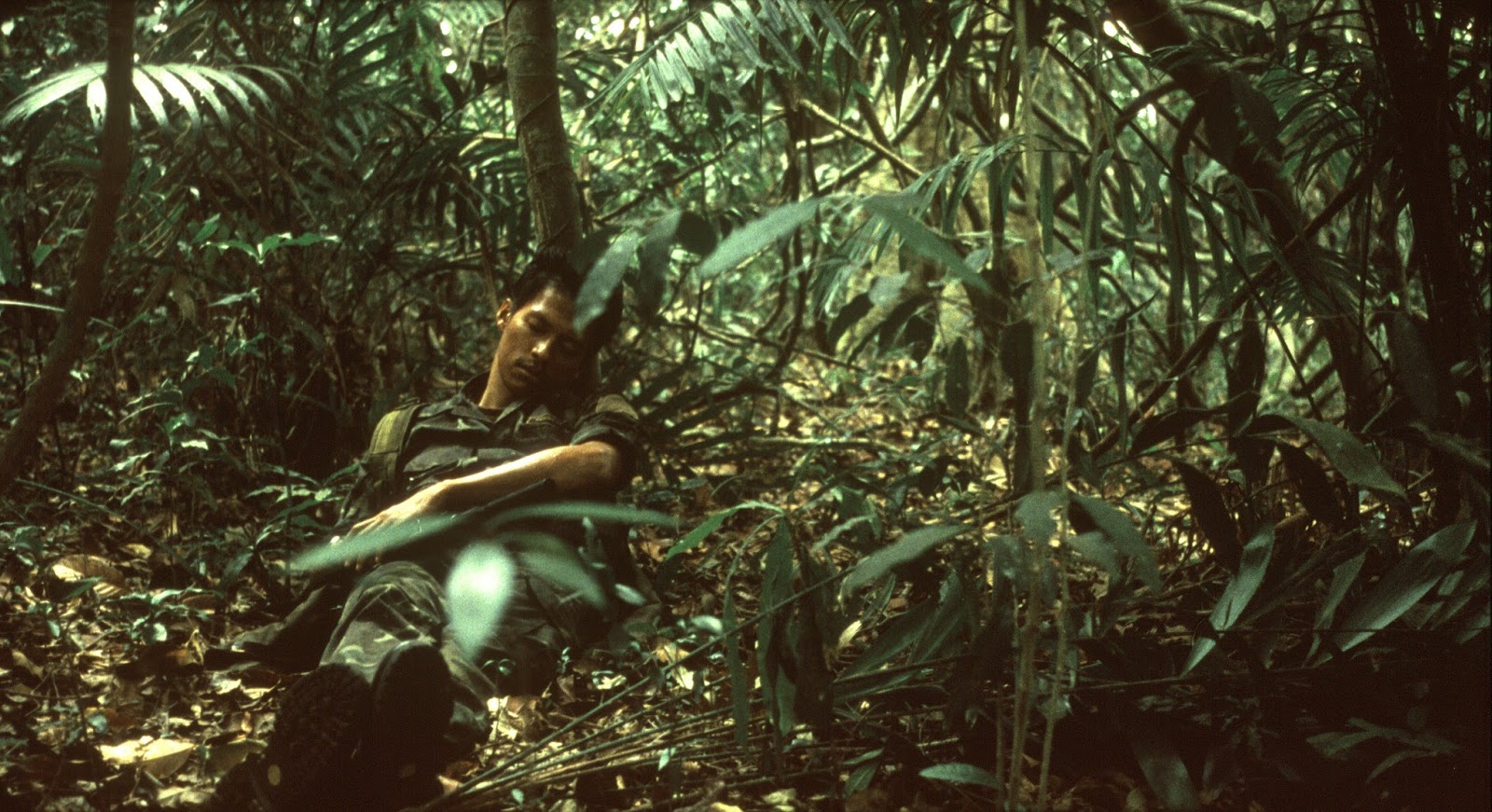


Half tender love story, half spellbinding, hallucinatory fable, Apichatpong Weerasethakul's Tropical Malady is a trippy, romantic enigma of a mood piece whose two equally beguiling sections play off one another brilliantly. It also features some what-the-fuck inducing jungle weirdness - more Ciro Guerra than Herzog or Coppola - that provides an ideal setting for the film of dark, labyrinthine depths and unexplained mysteries that plays out.

The Duke of Burgundy (2014)


By means of some hazy, orange tinted cinematography from Nic Knowland - all autumn leaves and dusky lamps - and a dream inducing, folky soundtrack from Cat's Eyes, Peter Strickland's The Duke of Burgundy is a film elevated to gorgeously cinematic heights. Indeed, this self aware, Sapphic S&M romance is something you don't see every day: an oddly touching exploration of universal truths of relationships (love the way we are shown subtle changes in the rituals of their relationship), wrapped up in a exquisitely composed homage to 70s erotica. 

Carol (2015)


With its delicately manicured 50s aesthetic, lustrous 16mm cinematography, and two remarkably subtle performances from Cate Blanchett and Ronney Mara, Todd Haynes' Carol paints one of the most achingly beautiful portraits of forbidden love I have ever seen. This is a film obsessed with capturing all of the minutiae of a relationship: the longing glances; the stolen moments; the lingering touches; and the hushed whispers. I love it.

Saturday, 3 June 2017

Ten summer films that I like

As a celebration of the arrival of summer, I have compiled a list of summer related films that I find enjoyable. 

Early Summer (1951)


In Ozu's Early Summer or 
Bakushû, the first days of summer - captured in calm, languid style - make for an appropriate setting for the delicate, melancholic story of familial tension that plays out. With a gently swooning score, a beautiful central performance from Setsuko Hara, some charming sequences of banter between the women, and typically enigmatic 'pillow shots' of fluttering windsocks and drifting clouds, it is a delightful film of lyrical simplicity.

Summer with Monika (1953)


Summer is not something that would necessarily be associated with the bleak Nordic intensity of Bergman, however, here and in other films such as Summer Interlude we are shown the summery Swedish countryside in all its glory. This film though, is above all about the flirtatious yet steely Monika; played by Harriet Andersson whose penetrative gaze seems to toy with her lover Harry, she is a sort of femme fatale, every bit as memorable as a Rita Hayworth or Barbara Stanwyck. I also love the ending where Harry stares solemnly to camera, interspersed with a sequence of memories of Monika - sunbathing and skinny dipping - it is a darkly cruel ending.
 

12 Angry Men (1957)


This American classic from Sidney Lumet, almost completely confined to one room, is a masterclass in the creation of suspense - all bulging veins, loosened ties, and greasy hair - 
here, the sweltering heat works well to heighten both the claustrophobia of the setting and the almost palpable tension between the jurors. As the film progresses and things begin to heat up, Lumet famously switches longer shots of multiple jurors for tight close ups, ratcheting up the intensity as we approach a climax of impressive emotional resonance.


Jules and Jim (1962)


In many ways, the liberated playfulness of Truffaut and the French New Wave seems a perfect match for the feeling of opportunity that summer inspires. Summed up delightfully by the opening scenes in Jules and Jim; the romantic whimsy of the eponymous duo plus Jeanne Moreau's excellent Catherine is completely infectious regardless of the tragedy that ensues later in the film. One thing to add: this one isn't exclusively set in the summer but the initial scenes at the seaside are too wonderful for it to be omitted.  

The Texas Chain Saw Massacre (1974)


The sweat, the grime, the gore, the relentless, grinding monotone of the chainsaw, the breathless screams, the final deranged spin, silhouetted against the sunset; The Texas Chain Saw Massacre irrevocably etches this stuff onto your brain in a way that few other horror films do. 
This one is certainly up there as one of the filthiest, most depraved films that I have ever come across: a truly grim vision of summer. 

Jaws (1975)


Spielberg's ceaselessly iconic, masterfully crafted exercise in restraint, Jaws still hangs like a dark shadow over beach resorts across the land, indeed it will forever haunt idyllic scenes of colourful sun umbrellas and children frolicking in the shallows. The fact that this film still lingers in the mind years after its release is testament to its effectiveness. 

Sleepaway Camp (1983)


This is one of those films where you need to leave all logic and reason behind and just let yourself be overcome by its raw, unadulterated power. Starring some of the campest 80's costumes you're likely to come across, a collection of solidly turned up to eleven performances, and a truly what the fuck ending, Robert Hiltzik's Sleepaway Camp is 80's slasher summer camp trash at its most wonderfully off-the-wall.


Do the Right Thing (1989)


Set on the hottest day of the year in a Brooklyn neighbourhood - as highlighted by Samuel L. Jackson's hilarious radio DJ Mister Señor Love Daddy, "I have today's forecast for you... hot! Sss!" -  Spike Lee's Do the Right Thing is a potent story of racial division. As vibrantly funny as it is fiercely political, and featuring one of the most devastating endings in cinema history, this charmingly idiosyncratic film dives deep into the heart of the complexity of race relations in America.

Dazed and Confused (1993)


I can think of few films that capture that feeling of all-consuming joy, excitement, and possibility that accompanies the arrival of summer so perfectly. Featuring a brilliant ensemble cast with a particularly amusing turn from Matthew McConaughey ("alright alright alright") and the trademark Linklater, honest treatment of his characters, the hot, hazy Texas summer evening which we are shown is the ideal setting for this laid-back tale of adolescent discovery, disillusionment, and rebellion.


Sexy Beast (2000)


Jonathan Glazer's debut is a super stylish, one last job story of underrated emotional heft, complete with some remarkable performances from Ray Winstone and Ben Kingsley (no no no no no no no...). Nothing screams summer like Ray Winstone's alarmingly red body, drenched in sweat, and concealed by nothing but some skimpy, yellow budgie smugglers. 

Wednesday, 1 March 2017

Ten opening scenes that I like

A selection of opening scenes that are, in my opinion, very good.

Rashomon (1950)


During the opening sequences of Kurosawa's Rashomon an oppressive, slightly melancholic atmosphere is established in a scene that seems to teem with symbolism. The overpoweringly heavy rain strikes me as reflecting the lack of moral clarity in the film created by the subjectivity inherent in the film's unique narrative structure and the image of the dilapidated city gate seems a fitting representation of the tale of moral decay that follows, perhaps hinting at the ruinous state of society that Kurosawa perceives. Regardless of any of that cerebral rubbish though, the scene functions on a purely practical level, introducing us to the main characters and creating a cryptically dark mood that intrigues instantly. 

Touch of Evil (1958)


Perhaps one of the most famous opening scenes in cinema history, Touch of Evil's brilliant three and a half minute long take works on so many levels. Firstly, it gives us a strong sense of the world in which the drama will unfold; we are shown a seedy border town, inhabited by both flashy american cars and the shabby handcarts of the Mexican locals. The scene is also laced with an irrepressible tension due to the first shot of the film, showing a man placing a bomb in the back of a car. As the camera glides this way and that - Welles plays with our expectations - delaying the bomb's explosion until the car finally leaves our field of view, releasing the tension when we least expect it. Not to be forgotten is Welles' typically innovative use of sound. As the focus shifts from one thing to another, we hear a myriad of different sounds, creating a bustling soundscape that reflects the diverse environment that is depicted.

La Dolce Vita (1960)


This brilliantly bold opening is one of the best examples of provocation in cinema. At the time of the film's it was a shockingly open challenge to catholic morality and the role it played in Italy, perhaps lost on me slightly as neither an Italian nor catholic. Straying far from the faithful depiction of everyday life of the neorealist tradition, this set piece is perfectly reflective of the more flamboyant outlandish approach taken by Fellini in La Dolce Vita. The uncompromisingly aggressive visual metaphor of a statue of Christ being flown over Rome, suspended from a helicopter, aptly symbolises the place of Catholicism in the mind of Italians, subverting its sanctity with a satirical flourish. 

The Godfather (1972)


The Godfather opens with a scene that is all about atmosphere, establishing the character of Vito Corleone and some of the intricacies of their culture in broodingly cinematic fashion. Nino Rota's haunting score subtly sets the scene before we are confronted with an image of one man shrouded in darkness, pleading for Corleone's help. The camera pulls out slowly, emphasising the man's weakness as he seems to be engulfed by his surroundings. We then see Corleone for the first time, captured against the light and dark backdrop of the blinds. This classic noir technique hints towards the moral ambiguity that is central to Corleone's character and foreshadows the battle of principles that his youngest - still innocent - son Michael goes through. 

Manhattan (1979)


Manhattan opens with a scene that is oddly transcendent, in one of those rare moments of alchemy, Allen finds a near perfect combination, creating something greater than the sum of its parts. George Gershwin's Rhapsody in Blue is exquisite, lending an otherworldly beauty to the sequence, Gordon Willis' black and white cinematography is glorious, reflecting the narrator's nostalgic idealised perspective of the city, and Woody Allen's narration is typically witty. 

Raging Bull (1980)


This is in many ways the ideal introduction to the character of Jake La Motta. We see him in the only place that he feels truly comfortable - the boxing ring -  captured in glorious slow motion, silhouetted against the flashing cameras of the onlookers. Despite what is a crowded scene, he is alone in the frame; a fitting reflection of the character's isolation from the rest of society. It sets the scene perfectly, painting La Motta as an outsider, showing the audience his loneliness before a word has even been said.

Blue Velvet (1986)


Everything about the imagery initially found in the opening scene to Lynch's Blue Velvet screams suburban idyll. A tongue-in-cheek parade of cliches - picket fences, manicured gardens and a lollipop lady - paint a picture of a tranquil utopia that is eroded as the scene progresses. The almost comically ideal world that was first portrayed is shattered to reveal a disquiet that bubbled beneath the surface. This tension is reflected in a series of shots of a hose - tangled and caught on branches - it strains as the pressure rises, struggling to contain the water. 

Boogie Nights (1997)


Paul Thomas Anderson's ensemble piece begins with a three minute long tracking shot brimming with fittingly laid back flare. Reminiscent of Scorsese's Copacabana sequence from Goodfellas, Anderson plunges us into the centre of the action, introducing us to a majority of the cast and revealing much about the dynamics between them. The shot mainly tracks Burt Reynolds' character - a porn director - as he makes his way around a club; skipping the queue Henry Hill style, we are given an insight to the character's influence. Once we are inside, a great moment is shared between Reynolds and Wahlberg. The characters lock eyes, the camera slows down and the stars that Wahlberg is framed in front of aptly foreshadow his future.           


Antichrist (2009)


Antichrist's opening features the Danish provocateur Lars Von Trier at his most gloriously provocative. The "prologue" depicts a couple making love as their child climbs out of their cot and falls out of a window to their death. We see this play out in gorgeous slow motion black and white that lends a cinematic grandeur to the tragic sequence. This is accompanied by a hauntingly beautiful baroque soundtrack whose lyrics - when translated - lament "Let me weep over my cruel fate, and that I long for freedom" in what seems fitting fashion. Though what happens is extreme, this scene is more than just a meaningless attempt to be controversial from Von Trier. It is not only vital in establishing the origin of the mother's profound depression but also works on a visceral level, playing on innate parental fears.  

Inglorious Basterds (2009)


Whether you love, hate or are indifferent to Tarantino, the suspense which he crafts in this scene is undeniable; containing one of the all time great moments of creepy milk drinking (up there with A Clockwork Orange), this scene is irrepressible. Waltz's performance is excellent, I can think of few instances where a character's politeness has been so threatening; he turns every line of typically sharp Tarantino dialogue into a menacing threat, regardless of its seeming innocence. We also have a wonderfully comic contrast of pipe sizes that reflects the characters personalities perfectly and a shamelessly good The Searchers inspired landscape through a door shot.  

Thursday, 9 February 2017

Favourite five - Woody Allen

A list of my five favourite Woody Allen films in no particular order. Some honourable mentions also have to go to:
Broadway Danny Rose
Blue Jasmine
Stardust Memories
Bananas

Annie Hall (1977)


Annie Hall is in many ways the most Woody Allen-y of all his films (perhaps just because its mainstream success helped to define our idea of Woody Allen-yness). But anyway, Allen plays a witty, grousing and of course neurotic creative supported by Diane Keaton in the female lead, who is as scatterbrained as she is sharp. Via near constant introspection from Allen we are guided through the world from his confused perspective, treating us to an unbroken stream of intellectual wit and his unique brand of cynicism. It is often forgotten that although this is a film made up primarily of speaking, few films have done speaking with such invention. There is of course the subtitled dialogue between Allen and Keaton, split screen sequences in which characters address each other, and frequent breaking of the fourth wall ("You know nothing of my work"). Above all, the brilliance of Annie Hall lies in its refusal to follow conventions, its irrepressible charm is caused as a result of its quirks and idiosyncrasies.   


Manhattan (1979)


Manhattan begins with one of the most inexplicably wonderful opening sequences ever. As Gershwin's Rhapsody in Blue swells, we see Manhattan captured in all its black and white glory by Gordon Willis, accompanied by touchingly funny narration from Allen. Manhattan's narrative centres on Isaac (Allen) and his relationship with two women, Tracy (Mariel Hemingway), a high school 17 year old, and Mary (Diane Keaton), a writer. Both women, almost polar opposites of each other, are played brilliantly. Tracy has a self assured candor central to her character portrayed beguilingly by Hemingway, whereas, Mary is full of fickle nervous energy and intellectualism ("I always was a sucker for Germanic theatre"). The beauty with which Gordon Willis' widescreen black and white cinematography imbues the city also has to be mentioned. We see the interior of Isaac's apartment captured with a brooding intensity that Sven Nykvist would have been proud of, Allen and Keaton's faces are silhouetted against the backdrop of a planetarium in a sequence that feels genuinely otherworldly, and there is of course the shot of them sitting at the bench overlooking Queensboro bridge as the sun comes up. 

Hannah and her Sisters (1986)


In Hannah and her Sisters we follow the lives of Hannah and her two other sisters via a series of overlapping stories. As is so often the case in Allen's best films, an excellent balance is struck between emotional heft and comedic lightness. With small titles, white font on a black screen, breaking up each part of the story, the drama is played out with a theatrical tone, as his confused characters flounder in their quest for meaning. Nobody portrays this conflict with more skill than Michael Caine who puts in a performance of touching authenticity playing the husband of Hannah, who falls in love with her sister. However, the delicacy with which the intricacies of the relationships between the three sisters are realised is what strikes me above all. The complicated dynamic is captured wonderfully in a scene where the three sisters go out for lunch. As they argue about various topics, the camera circles the table, moving from one reaction to another, each time revealing a new depth to each relationship. The complexity is displayed in excruciating detail as we come to understand the distinct ways in which each sister relies on the other.  

Crimes and Misdemeanours (1989)


Crimes and Misdemeanours is one of the most bleak and acerbic of Woody Allen's films, despite this, it manages to maintain a remarkably prominent comedic tone. The film centres on Judah (Martin Landau), a narcissistic ophthalmologist with a distorted view of his own morality who orders the murder of his mistress Dolores. Judah  receives no retribution for his actions, lacing the film with a nihilistic streak more caustic than any of Allen's other work. Via this story, Allen investigates a number of philosophical quandaries. Why should we act in a moral way? Is the only thing that motivates moral actions a fear of being caught? In one particularly memorable scene, Judah has an imaginary conversation with his rabbi where he discusses breaking up with his wife. He rationalises his actions in a self important manner typical of his character, "She won't forgive me... she idealises me." Allen also plays a vital role in the film as a maker of unthinkably dull documentaries, preventing the film from becoming too bogged down in its cerebral pretensions. His character provides the usual laughs by means of sardonic analysis of both himself and a world which never ceases to mystify him. In the film, Allen's direction is able to deftly incorporate disparate themes with an admirable elegance, achieving something as dark as it is funny. 


Husbands and Wives (1992)


In our first introduction to the characters of Husbands and Wives, the movement of the camera, in many ways, foreshadows the fate of their relationships. As we float this way and that, tracing a confused path around the characters with what appears to be indecision, their turmoil becomes clear. Husbands and Wives tells the tale of two couples as they grapple with what they think their relationships should constitute; as they age, and their idealised notions of a perfect marriage become evermore distant, Allen ponders (in classic Allen fashion) the meaning of love. Handheld camera work gives a documentary like immediacy to the film which breeds an intimacy with the characters, and jump cuts are used frequently to give the dialogue a disjointedness reflective of the bewilderment of the characters. Husbands and Wives is a film which raises many questions but answers none of them, leaving you just as confused as the characters.